
Uncategorized
MikroTik Hotel Wi-Fi: Build a Better Guest Network
Hotel Wi-Fi Is More Than an Access Point: Building It with MikroTik
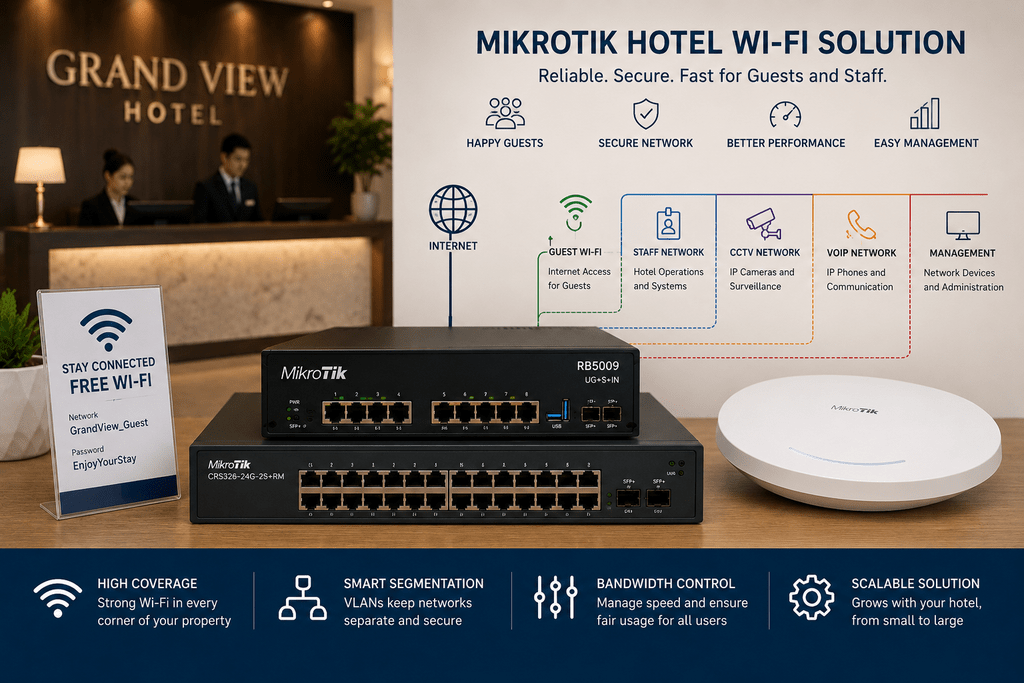
Guests rarely ask what router a hotel uses. They simply expect the Wi-Fi to work.
However, a hotel network may need to support guest rooms, reception, offices, restaurants, CCTV cameras, VoIP phones, smart TVs, staff devices, and other connected systems at the same time.
That makes MikroTik hotel Wi-Fi less about installing one powerful router and more about designing the entire network correctly.
One Network, Very Different Users
Hotel networks have several types of traffic.
Guests may be streaming videos or making video calls. Meanwhile, reception staff need reliable access to business systems. CCTV cameras continuously send video traffic, while VoIP phones and other services also depend on the network.
Putting everything on one unrestricted network can create performance and security problems.
Instead, MikroTik RouterOS can help separate different parts of the network using VLANs, firewall policies, bandwidth controls, and routing rules.
Give Guests Their Own Network
Guest Wi-Fi should normally remain separate from important hotel systems.
For example, the network can be divided into:
Guest Wi-Fi → Internet access for visitors
Staff network → Employee devices and business systems
CCTV network → Cameras and recording equipment
VoIP network → IP phones and communication
Management network → Network equipment and administration
This separation makes the network easier to control and helps protect critical services.
What Happens When the Hotel Is Full?
A network that works well with twenty guests may behave very differently when hundreds of devices connect.
Therefore, hotel Wi-Fi planning should consider more than maximum internet speed.
The number of rooms, expected users, access point locations, building construction, internet capacity, switches, cabling, and bandwidth requirements all matter.
Bandwidth management can also help prevent a small number of users from consuming a disproportionate amount of the available connection.
The Router Is Only Part of the Solution
Depending on the network size, MikroTik routers such as the L009, RB5009, or CCR series can provide the routing foundation.
However, the router cannot compensate for poorly positioned access points or inadequate cabling.
A reliable hotel network normally combines:
- A correctly sized router
- Managed network switches
- Multiple wireless access points
- Structured network cabling
- VLAN segmentation
- Internet bandwidth management
- Suitable power backup
Each component contributes to the guest experience.
What About Guest Login?
Hotels may also want more control over how guests access Wi-Fi.
Depending on the required setup, RouterOS provides hotspot and network-management capabilities that can form part of a controlled guest-access solution.
The exact approach should depend on how the hotel wants guests to connect and how the network will be managed.
Design for the Busiest Day
Hotel Wi-Fi should not be designed around how the network performs when occupancy is low.
It should be designed around the evening when rooms are full, guests are streaming, staff are working, CCTV cameras are recording, and multiple business systems need connectivity simultaneously.
That is when good network design becomes noticeable.
Planning a Hotel or Guest Wi-Fi Network?
Supreme Networks supplies MikroTik routers, switches, wireless networking equipment, and related network infrastructure for hotels, lodges, apartments, offices, and other organizations in Kenya.
Contact Supreme Networks for assistance selecting equipment for your hotel Wi-Fi, guest network, network segmentation, bandwidth management, or business networking project.
