
Fiber Optic Cables
Siemon Cables
Fiber Optic Cables
Buy Network Cables in Kenya for Home, Office and Enterprise Networking
Supreme Networks supplies network cables in Kenya for residential, commercial and enterprise networking installations. Explore Ethernet cables, LAN patch cords, bulk structured cabling cables, fibre optic cables and specialized networking connections designed for reliable data transmission.
Network cabling plays an important role in connecting routers, network switches, wireless access points, servers, IP cameras, computers, printers and other network-enabled devices. Choosing the correct cable helps support network performance, reliability and future expansion.
Types of Network Cables Available in Kenya
Different networking applications require different cable standards, connectors and installation methods. Common options include twisted-pair copper Ethernet cables, fibre optic cables, direct-attach cables and specialized outdoor networking cables.
Ethernet LAN Cables
Ethernet LAN cables are widely used to connect computers, routers, switches, wireless access points and other compatible networking equipment. They provide wired connectivity for local area networks in homes, offices, schools, hospitals and commercial buildings.
Ethernet cables are available in different performance categories, lengths, shielding configurations and conductor types. Common standards include Cat5e, Cat6, Cat6A, Cat7 and Cat8.
Cat5e Ethernet Cables
Cat5e cables are commonly used for Gigabit Ethernet networking and support frequencies up to 100MHz. They are suitable for many standard office and home networking applications.
Cat5e cabling can support 1000BASE-T Gigabit Ethernet over channel lengths of up to 100 metres when properly installed and compliant with applicable standards.
These cables can be used with computers, routers, switches, network printers and compatible IP cameras.
Cat6 Ethernet Cables
Cat6 network cables are designed for higher performance than Cat5e and support frequencies up to 250MHz. They are widely used in modern structured cabling installations.
Cat6 supports Gigabit Ethernet over standard 100-metre channels and can support 10 Gigabit Ethernet over shorter distances under suitable installation conditions.
Cat6 cables are popular for offices, business networks, IP surveillance systems and wireless access point installations.
Cat6A Ethernet Cables
Cat6A cables support frequencies up to 500MHz and are designed for 10 Gigabit Ethernet over compliant channel lengths of up to 100 metres.
They are suitable for high-performance office networks, data centres, server rooms and installations requiring additional bandwidth capacity.
Cat6A is also worth considering for modern high-power PoE deployments, provided the entire cabling system meets the relevant installation requirements.
Cat7 Network Cables
Cat7 is a shielded cabling category associated with ISO/IEC Class F systems. Products marketed as Cat7 are commonly offered for high-frequency networking applications.
However, Cat7 is not a recognized TIA category, and products using ordinary RJ45 connectors do not necessarily form a compliant Class F channel.
For standardized RJ45-based installations, compare certified Cat6A and Cat8 products according to the required network speed and distance.
Cat8 Ethernet Cables
Cat8 Ethernet cables are designed for high-speed short-distance network connections and support frequencies up to 2000MHz.
Compliant Cat8 cabling can support 25GBASE-T and 40GBASE-T applications over channels of up to 30 metres, subject to the applicable standards and compatible equipment.
Cat8 is primarily intended for specialized short-distance connections, including selected data centre and server networking applications.
Ethernet Patch Cables and LAN Patch Cords
Ethernet patch cables are factory-terminated networking cables commonly used to connect devices to wall outlets, network switches, patch panels and routers.
They are available in different lengths, colours, categories and shielding options. Common lengths include 0.5m, 1m, 2m, 3m, 5m, 10m and longer options depending on the product.
Cat6 Patch Cords
Cat6 patch cords are suitable for connecting computers, routers, switches, wireless access points and other compatible devices in Gigabit Ethernet networks.
Factory-terminated patch cords provide a convenient option for office desks, server racks, networking cabinets and other indoor installations.
Cat6A Patch Cords
Cat6A patch cords are designed for compatible high-performance networks, including 10 Gigabit Ethernet applications.
They are commonly used in server rooms, network cabinets and business environments requiring higher bandwidth connections.
Shielded Ethernet Patch Cables
Shielded Ethernet patch cables incorporate shielding intended to reduce electromagnetic interference in suitable installations.
Shielded cabling requires compatible connectors, termination practices and an appropriate grounding and bonding design to deliver the intended benefits.
Bulk Network Cables for Structured Cabling
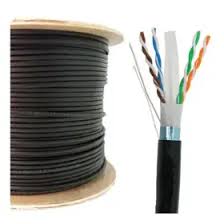
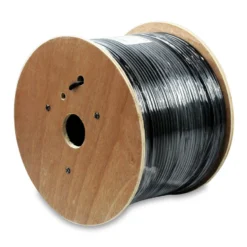
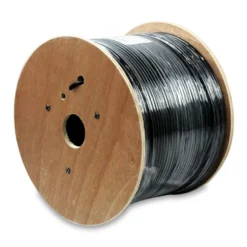
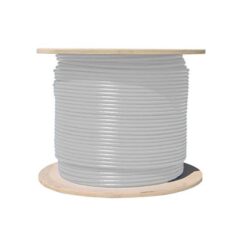
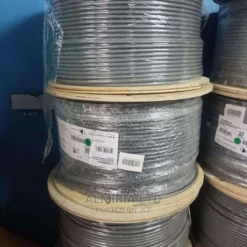
Bulk network cables are supplied in reels or boxes for permanent installation in offices, commercial buildings, schools, hotels, hospitals and residential properties.
They are commonly used to connect wall outlets, patch panels, network cabinets and wireless access points through structured cabling infrastructure.
305-Metre Ethernet Cable Boxes
Bulk Ethernet installation cable is commonly supplied in 305-metre boxes, although other packaging lengths are available.
Installers can measure and terminate individual cable runs according to the building layout and required network points.
When planning permanent Ethernet cabling, observe applicable channel and permanent-link length limits rather than assuming the entire box can be used for one connection.
Solid Copper vs Copper-Clad Aluminium Cables
Solid copper conductors are preferred for standards-compliant permanent Ethernet cabling and PoE applications.
Copper-clad aluminium, commonly called CCA, has different electrical properties and does not meet the copper-conductor requirements of recognized structured cabling standards.
For dependable networking installations, particularly those involving Power over Ethernet, choose properly specified copper cabling.
UTP Network Cables
Unshielded twisted-pair cables are widely used in homes and offices where the installation environment does not require additional electromagnetic shielding.
UTP cabling is suitable for many standard Ethernet installations when properly routed, terminated and tested.
FTP and Shielded Network Cables
Foiled twisted-pair and other shielded cable constructions provide additional protection against electromagnetic interference in suitable environments.
Shielded cabling may be appropriate near industrial equipment, electrical installations and other sources of interference.
The complete cabling system should be designed with compatible shielded components and appropriate grounding practices.
Fibre Optic Cables in Kenya
Fibre optic cables transmit information using light rather than electrical signals. They are commonly used for high-speed backbone connections, data centres, telecommunications networks and long-distance network links.
Fibre optic cabling is available in single-mode and multimode configurations, with different connectors, fibre counts and installation ratings.
Single-Mode Fibre Optic Cables
Single-mode fibre is commonly used for long-distance network connections, telecommunications infrastructure and high-speed backbone links.
It is typically associated with optical transceivers operating at wavelengths such as 1310nm and 1550nm, depending on the application.
Choose the fibre type and optical transceivers according to the required distance, data rate and link budget.
Multimode Fibre Optic Cables
Multimode fibre is commonly used for shorter-distance optical networking applications within buildings, campuses and data centres.
Common multimode fibre types include OM2, OM3, OM4 and OM5, with different bandwidth and transmission capabilities.
Supported distances depend on the fibre grade, optical transceiver standard and network speed.
Fibre Optic Patch Cords
Fibre optic patch cords connect compatible optical equipment, patch panels and fibre distribution infrastructure.
Common connector types include LC, SC and other application-specific connectors. Patch cords may be simplex or duplex, single-mode or multimode.
Before purchasing, confirm connector type, polish type, fibre grade and required length.
Fibre Optic Pigtails
Fibre optic pigtails are short lengths of fibre terminated with a connector at one end and left unterminated at the other.
They are commonly used for splicing into fibre distribution systems, patch panels and optical termination enclosures.
Armoured Fibre Optic Cables
Armoured fibre optic cables provide additional mechanical protection for suitable indoor or outdoor installations.
They may be used in ducts, underground routes and other environments where the cable requires enhanced physical protection.
Select the appropriate construction and environmental rating for the installation.
Outdoor Fibre Optic Cables
Outdoor fibre optic cables are designed for installation conditions such as moisture exposure, temperature variation and mechanical stress.
Different products are available for aerial, duct and direct-burial applications. The selected cable must be rated for the intended installation method.
Outdoor Ethernet and Networking Cables
Outdoor Ethernet cables are designed for networking installations exposed to environmental conditions beyond those encountered indoors.
Depending on the product, outdoor-rated cables may offer UV-resistant jackets, moisture resistance and other protective features.
Outdoor Cat6 Cables
Outdoor Cat6 cables are commonly used for compatible IP cameras, wireless bridges, outdoor access points and networking equipment installed outside buildings.
Choose cables specifically rated for outdoor use and ensure the installation includes suitable surge protection and grounding where required.
Direct-Burial Ethernet Cables
Direct-burial Ethernet cables are designed for underground installation without an additional conduit where the product rating and local installation requirements permit.
For connections between separate buildings, fibre optic cabling is often preferable because it avoids conductive copper links between different electrical grounding environments.
PoE Network Cables
Power over Ethernet allows compatible networking equipment to receive electrical power and data over twisted-pair Ethernet cabling.
PoE is commonly used with IP cameras, wireless access points, VoIP phones and selected network devices.
Choose compliant copper cabling with suitable conductor size, installation rating and thermal performance for the intended PoE standard and cable bundle.
Network Cables for CCTV and Security Systems
IP surveillance systems commonly use Ethernet cables to connect network cameras, PoE switches, network video recorders and other compatible equipment.
Cat5e and Cat6 cables are frequently used for IP camera installations, depending on bandwidth requirements and installation conditions.
For outdoor surveillance installations, select suitable outdoor-rated cable and follow appropriate electrical protection practices.
Ethernet Cables for IP Cameras
Ethernet cables connect IP cameras to compatible switches, recorders and networking equipment.
Where PoE is supported, a single Ethernet cable can carry both network data and electrical power within the relevant standards and distance limits.
Network Cables for Wireless Access Points
Wireless access points commonly use Ethernet cables for their network uplink and may also receive power through PoE.
For modern access points with high-speed Ethernet uplinks, select cable categories that meet the required data rate and installation distance.
Network Cables for Routers and Switches
Ethernet patch cords connect routers, network switches, firewalls and other wired networking devices.
For standard Gigabit connections, compliant Cat5e or Cat6 cables are often suitable. Higher-speed connections may require Cat6A, fibre optic cabling or other compatible media.
Network Cables for Servers and Data Centres
Servers and data centres require carefully selected cabling to support high-speed network traffic, equipment density and maintenance requirements.
Common solutions include Cat6A copper cabling, fibre optic patch cords and compatible direct-attach connections.
Select cabling according to the network interface, distance, data rate and equipment compatibility.
Direct Attach Copper and High-Speed Networking Cables
Direct Attach Copper cables, commonly called DAC cables, are used for short-distance high-speed connections between compatible switches, servers and other networking equipment.
They are commonly associated with interfaces such as SFP+, SFP28, QSFP+ and QSFP28, depending on the product and supported network speed.
SFP+ DAC Cables
SFP+ DAC cables are commonly used for short-distance 10 Gigabit Ethernet connections between compatible networking devices.
They can be suitable for server racks and nearby network equipment where the interfaces and cable coding are compatible.
Active Optical Cables
Active Optical Cables, or AOCs, integrate optical transceiver technology with fibre cabling for compatible high-speed network connections.
They can provide an alternative to DAC cables where longer supported distances or different cabling characteristics are required.
How to Choose the Best Network Cable in Kenya
Selecting the correct networking cable requires considering the network speed, transmission distance, installation environment and connected equipment.
Choose the Right Ethernet Cable Category
Cat5e and Cat6 are suitable for many Gigabit Ethernet installations. Cat6A is commonly selected for standards-based 10 Gigabit Ethernet cabling over distances of up to 100 metres.
Cat8 is designed for specialized short-distance high-speed applications, while fibre optic solutions are often used for high-bandwidth or longer-distance links.
Consider the Required Cable Length
For common twisted-pair Ethernet applications, a standards-compliant channel is generally limited to 100 metres, including patch cords, with specific exceptions and different limits for some technologies.
For longer distances, consider fibre optic cabling, network switches or another suitable networking design.
Choose Indoor or Outdoor-Rated Cable
Indoor Ethernet cables should be selected according to the applicable building and fire safety requirements.
Outdoor cables require suitable environmental ratings, including UV and moisture resistance where necessary.
Do not assume that an ordinary indoor patch cord is suitable for permanent outdoor installation.
Check Cable Shielding Requirements
UTP cables are appropriate for many standard networking installations, while shielded cable systems may be beneficial in environments with significant electromagnetic interference.
Shielding should be selected as part of the complete installation design rather than as an isolated cable feature.
Consider Future Network Expansion
For new office installations, selecting suitable structured cabling can reduce the need for future cable replacement.
Consider expected network speeds, wireless access point upgrades, PoE requirements and the anticipated lifespan of the installation.
Frequently Asked Questions About Network Cables
Which is better, Cat5e or Cat6?
Cat6 provides higher specified bandwidth and improved transmission characteristics compared with Cat5e. Both can support Gigabit Ethernet over compliant channel lengths of up to 100 metres.
Can Cat6 support 10Gbps?
Cat6 can support 10 Gigabit Ethernet over shorter distances under suitable conditions. For standards-based 10Gbps links up to 100 metres, Cat6A is generally the preferred copper cabling category.
What is the difference between Cat6 and Cat6A?
Cat6 is specified to 250MHz, while Cat6A is specified to 500MHz and supports 10GBASE-T over compliant 100-metre channels.
Can I use a Cat8 cable with a normal router?
Many Cat8 cables with standard RJ45 connectors are physically compatible with ordinary Ethernet ports. However, the connection speed is limited by the capabilities of the connected devices and network interfaces.
What is the maximum Ethernet cable distance?
Many common copper Ethernet standards support channels of up to 100 metres, although some higher-speed technologies have shorter limits. Always check the applicable Ethernet standard and cable specifications.
Is fibre optic cable better than copper Ethernet?
Fibre optic cabling is particularly useful for longer distances, high-bandwidth backbone connections and applications requiring electrical isolation. Copper Ethernet is widely used for ordinary device connections and supports PoE.
Which network cable is suitable for PoE cameras?
Properly specified copper Cat5e, Cat6 or Cat6A cables can support compatible PoE camera installations. The correct choice depends on the PoE standard, distance, installation conditions and equipment requirements.
Can Ethernet cables be used outdoors?
Yes, provided the cable is specifically rated for the intended outdoor environment. Ordinary indoor Ethernet cables may deteriorate when exposed to sunlight, moisture and temperature changes.
What is the difference between UTP and FTP cable?
UTP uses twisted pairs without an overall metallic shield, while FTP-style cables include foil shielding. Shielded systems require suitable installation practices and compatible components.
Should I buy a patch cord or bulk Ethernet cable?
Choose a ready-made patch cord for connecting nearby networking devices. Choose suitable bulk installation cable for permanent structured cabling between network cabinets, patch panels and wall outlets.
Order Network Cables Online in Kenya
Buy network cables in Kenya from Supreme Networks for home networking, office installations, CCTV systems, structured cabling, wireless networks and enterprise connectivity.
Explore Ethernet LAN cables, Cat5e, Cat6, Cat6A, Cat7 and Cat8 products, fibre optic cables, patch cords, bulk networking cables and specialized high-speed networking connections according to product availability.
Supreme Networks serves customers in Nairobi and across Kenya. Visit us at Queensway House, 3rd Floor, Kaunda Street, Nairobi.
For product inquiries, bulk orders and networking cable requirements, call 0711664906 or email [email protected].