
Fiber Patch Panel
Fiber Patch Panel
Fiber Patch Panel
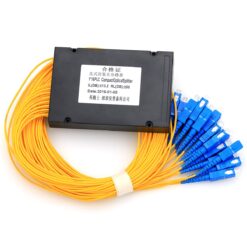
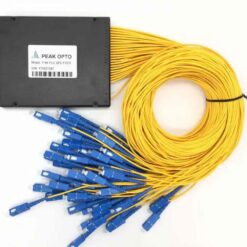
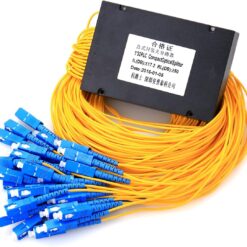
1×32 SC-UPC Fiber Optical PLC Splitter PLC Splitter Module Sm
Fiber Patch Panel
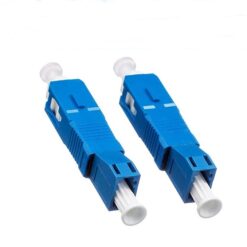
Fiber Patch Panel
Buy Fiber Patch Panels in Kenya for Fibre Optic Networks
Supreme Networks supplies fiber patch panels in Kenya for telecommunications infrastructure, internet service providers, data centres, enterprise networks and fibre-to-the-home installations. Explore optical distribution frames, fibre termination boxes, PLC splitters, outdoor dome enclosures and fibre installation accessories.
Fibre optic distribution equipment helps organize optical connections, protect fibre splices and provide convenient access for maintenance and network expansion. The correct equipment depends on fibre capacity, connector type, installation environment and the overall network architecture.
Whether you are building a new FTTH network, terminating a fibre backbone or expanding an existing optical distribution system, Supreme Networks offers fibre optic accessories in Nairobi with delivery arrangements across Kenya.
Types of Fiber Patch Panels and Distribution Equipment
12-Core Fiber Optic Patch Panels
12-core fibre patch panels are suitable for compatible installations requiring termination and organization of up to twelve optical fibres.
They are commonly used in small office fibre networks, telecommunications cabinets and building distribution systems.
Supreme Networks lists a 12C Fiber Optical Empty Distribution Frame 1U for suitable rack-mounted fibre installations.
Because this is an empty distribution frame, confirm which adapters, pigtails, splice trays and other components are included before ordering.
24-Core Fiber Optic Patch Panels
24-core fibre patch panels provide greater termination capacity for suitable fibre optic installations.
They can be used in data cabinets, enterprise fibre backbones, ISP infrastructure and telecommunications distribution points.
Supreme Networks lists a 24C Fiber Optical Empty Distribution Frame 1U for compatible optical fibre termination requirements.
Check the number of adapter positions, splice tray arrangement and included accessories before purchasing.
Rack-Mount Fiber Optic Distribution Frames
Rack-mounted optical distribution frames provide organized fibre termination inside compatible network cabinets and equipment racks.
They allow installers to manage fibre connections between incoming cables, patch cords and networking equipment.
Common configurations include 1U panels with different fibre capacities.
Empty Fiber Optic Distribution Frames
Empty optical distribution frames provide a housing for fibre termination components without necessarily including all adapters, pigtails or splice accessories.
They can offer flexibility when configuring a panel for a particular connector type or fibre count.
Verify the supplied components and compatibility with the intended installation.
Fiber Access Terminal Boxes
Fibre access terminal boxes provide protected termination and distribution points for optical fibre networks.
They are commonly used in FTTH installations, building distribution networks and customer access infrastructure.
Different models support different mounting methods, fibre capacities and cable entry arrangements.
Outdoor Fiber Optic Splice Enclosures
Outdoor fibre optic splice enclosures protect optical fibre joints from suitable environmental exposure when correctly installed.
They are used in aerial, underground and other approved fibre distribution environments.
Choose an enclosure according to splice capacity, cable entry requirements, sealing design and environmental rating.
12-Core vs 24-Core Fiber Patch Panels
When to Choose a 12-Core Patch Panel
A 12-core patch panel may be appropriate for smaller installations with limited fibre termination requirements.
It can be used for branch office connections, building network links and selected telecommunications applications.
Allow spare capacity where future expansion is expected.
When to Choose a 24-Core Patch Panel
A 24-core patch panel is useful where more optical fibres need to be terminated in a centralized location.
It may suit larger network cabinets, campus networks and enterprise fibre backbones.
The correct panel capacity depends on the number of fibres being terminated and future network requirements.
Can a 24-Core Panel Terminate 12 Fibres?
Yes. A compatible 24-core panel can be partially populated to terminate twelve fibres while retaining additional positions for future use.
Confirm that the panel supports the required adapter and splice arrangements.
Does Higher Fibre Capacity Increase Internet Speed?
A higher fibre count provides additional optical paths or termination positions, but it does not automatically increase the speed of an individual connection.
Network speed depends on the optical transceivers, active equipment, fibre characteristics and transmission technology.
Fiber Optic Distribution Frames in Kenya
What Is an Optical Distribution Frame?
An optical distribution frame, commonly called an ODF, provides a structured location for terminating, organizing and patching fibre optic cables.
It helps protect fibre connections while allowing technicians to access individual optical links for testing and maintenance.
Functions of a Fiber ODF
Fibre ODF equipment can support cable entry, fibre management, splice organization, adapter mounting and patch cord routing.
The available functions depend on the specific panel design and included components.
Fiber ODF for Network Cabinets
Rack-mounted fibre distribution frames are commonly installed in network cabinets alongside switches, routers and other networking equipment.
They provide organized optical termination points for compatible fibre links.
Fiber ODF for Data Centres
Data centres use fibre distribution systems to organize optical connectivity between networking equipment and structured fibre cabling.
Proper labelling, bend management and patch cord organization help simplify maintenance.
Fiber ODF for ISP Networks
Internet service providers use optical distribution equipment at suitable network aggregation, distribution and termination points.
ODF panels help manage fibre connections between different sections of the optical network.
Fiber Access Terminal Boxes for FTTH
12-Core Fiber Access Terminal Boxes
Supreme Networks lists an indoor/outdoor 12-core fibre access terminal box for suitable optical distribution applications.
This type of enclosure can provide protected space for feeder cables, fibre splices, adapters and outgoing connections.
Its suitability depends on the exact installation environment and manufacturer specifications.
Indoor Fiber Access Terminal Boxes
Indoor fibre access terminal boxes are used in suitable building environments where optical fibres need to be terminated or distributed.
They can be installed in communications rooms, building distribution areas and compatible customer access locations.
Outdoor Fiber Access Terminal Boxes
Outdoor terminal boxes require environmental protection appropriate to the installation location.
They may be used on exterior walls, poles and other approved mounting positions.
Confirm the enclosure's ingress protection rating, mounting hardware and cable entry sealing requirements.
Empty Fiber Access Terminal Boxes
Empty fibre access terminal boxes allow installers to configure suitable fibre termination arrangements using compatible accessories.
Check whether adapters, splice trays, pigtails and other components must be ordered separately.
FTTH Customer Distribution Points
Fibre-to-the-home networks require suitable distribution and termination points between feeder cables, distribution fibres and customer drop cables.
Access terminal boxes help organize these connections and protect optical components.
PLC Fiber Splitters in Kenya
What Is a PLC Fiber Splitter?
A planar lightwave circuit splitter is a passive optical device used to divide optical power from an input fibre among multiple output fibres.
PLC splitters are commonly used in passive optical networks and FTTH distribution systems.
They do not require a local electrical power supply for their splitting function.
1x4 PLC Fiber Splitters
A 1x4 PLC splitter divides optical power from one input into four output paths.
Supreme Networks lists a single-mode bare fibre 1x4 PLC splitter for compatible optical distribution applications.
Check the optical specifications, packaging and termination requirements before installation.
1x8 PLC Fiber Splitters
A 1x8 PLC splitter provides eight optical outputs from one input.
Supreme Networks lists a single-mode 1x8 PLC splitter with SC/APC connectivity for compatible FTTH networks.
Confirm the operating wavelength range and optical loss budget.
1x16 PLC Fiber Splitters
A 1x16 PLC splitter divides the incoming optical signal among sixteen output paths.
It can be used in compatible passive optical network distribution designs.
The available optical power at each output is lower than the input power because of splitting and insertion losses.
1x32 PLC Fiber Splitters
A 1x32 PLC splitter provides thirty-two optical output paths from a single input.
It is commonly considered for suitable FTTH and PON distribution architectures.
Check the required optical power budget, splitter insertion loss and connector configuration.
1x64 PLC Fiber Splitters
A 1x64 PLC splitter divides optical power among sixty-four output paths.
Supreme Networks lists a single-mode 1x64 PLC splitter with SC/APC connections.
Higher split ratios increase optical splitting loss, so compatibility with the selected PON technology and optical power budget must be verified.
How to Choose the Correct PLC Splitter Ratio
Understanding Splitter Ratios
Common PLC splitter ratios include 1x4, 1x8, 1x16, 1x32 and 1x64.
The ratio identifies the number of optical output paths provided from the input.
The correct configuration depends on the network design, optical budget and supported equipment.
PLC Splitter Insertion Loss
Optical splitting introduces insertion loss. In general, a higher split ratio produces greater optical power loss.
For reference, ideal equal splitting loss is approximately 6dB for 1x4, 9dB for 1x8, 12dB for 1x16, 15dB for 1x32 and 18dB for 1x64.
Actual device insertion loss is higher and must be confirmed from the manufacturer's specification.
Optical Power Budget
The optical power budget accounts for attenuation from fibre cable, connectors, splices, splitters and other optical components.
It is essential to calculate the complete optical path before selecting a splitter ratio.
Single-Stage vs Cascaded Splitters
Some optical distribution networks use a single splitter stage, while others use multiple splitting stages.
The design affects optical loss, fibre routing and network maintenance.
Choose the arrangement according to the supported PON architecture.
PLC Splitters for GPON and Other PON Networks
PLC splitters are commonly used in compatible GPON and other passive optical network systems.
Supported split ratios depend on the optical network equipment, transmission standard, deployment conditions and available power budget.
SC/APC and SC/UPC Fiber Connections
What Is an SC/APC Connector?
SC/APC is an optical connector format with an angled physical contact polish.
It is widely used in compatible passive optical networks where low optical back-reflection is important.
What Is an SC/UPC Connector?
SC/UPC uses an ultra physical contact polish and is used in various compatible fibre optic applications.
Connector selection depends on the optical equipment and network design.
Can SC/APC and SC/UPC Be Connected Directly?
SC/APC and SC/UPC connectors should not be directly mated because their end-face polish geometries differ.
Using incompatible connector types can cause poor optical performance or connector damage.
Choosing Fibre Adapters
Fibre adapters should match the connector type, polish arrangement and other relevant specifications.
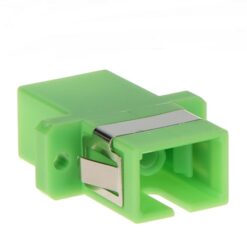
Common formats include SC and LC adapters for compatible single-mode or multimode applications.
Fiber Optic Splice Enclosures in Kenya
48-Core Fiber Optic Dome Enclosures
Supreme Networks lists 48-core outdoor fibre optic dome enclosures for compatible fibre splicing applications.
These enclosures provide protected space for organizing optical fibre joints.
Check splice tray capacity, cable entry sizes, environmental rating and installation method.
96-Core Fiber Optic Dome Enclosures
96-core dome enclosures provide higher splice capacity for suitable fibre distribution networks.
Supreme Networks lists a 96-core dome enclosure with a specified maximum capacity of 96 fibres.
Confirm the actual tray configuration and environmental specifications before installation.
Why Use a Fiber Splice Enclosure?
Optical fibre splices require mechanical protection and suitable management to maintain reliable network performance.
Splice enclosures help protect and organize joints in approved installation environments.
Outdoor Fibre Splice Protection
Outdoor splice enclosures must be installed according to their sealing and environmental protection specifications.
Incorrect cable entry sealing or installation can compromise protection against moisture and other environmental conditions.
Choosing the Correct Splice Capacity
Select a splice enclosure according to the number of fibre joints, available splice trays and future expansion requirements.
Allow sufficient internal space for proper fibre routing and bend management.
Fiber Patch Panels for Data Centres and Businesses
Enterprise Fibre Backbone Networks
Enterprise fibre backbones connect compatible network cabinets, floors and buildings using optical fibre infrastructure.
Fibre patch panels provide organized termination points for these links.
Fibre Patch Panels for Office Buildings
Commercial buildings may use fibre optic cabling to connect central network equipment with floor distribution cabinets.
Patch panels help organize these connections and support maintenance.
Fiber Distribution for Schools and Campuses
Schools, universities and institutional campuses often require fibre connections between separate buildings and network locations.
Suitable optical distribution frames can support structured termination and patching.
Fiber Patch Panels for CCTV Backbones
Larger IP surveillance systems may use fibre optic backbone links between network switches and monitoring locations.
Fibre patch panels help manage the optical connections at network cabinets.
Fiber Patch Panels for ISP Infrastructure
Internet service providers require organized fibre termination, splitting and distribution infrastructure.
ODF panels, PLC splitters and splice enclosures serve different functions within these networks.
Fiber Patch Panel Installation Guidelines
Confirm Fibre Capacity
Choose the required panel capacity based on the number of fibres to be terminated and future expansion plans.
Common configurations include 12-core and 24-core optical distribution frames.
Choose the Correct Mounting Type
Rack-mounted panels are appropriate for compatible network cabinets, while wall-mounted terminal boxes may be more suitable for selected distribution locations.
Check mounting dimensions and available installation space.
Verify Connector Compatibility
Check whether the optical system uses SC, LC or another connector format.
Confirm the required UPC or APC polish type and compatible adapters.
Maintain Fibre Bend Radius
Optical fibres must be routed without exceeding the manufacturer's minimum bend radius.
Excessive bending can increase optical attenuation or damage the fibre.
Organize Fibre Splice Trays
Splice trays help manage protected optical fibre joints inside compatible panels and enclosures.
Use suitable splice protection sleeves and follow the enclosure manufacturer's installation guidance.
Label Fibre Connections
Clear fibre identification simplifies network maintenance and troubleshooting.
Label panel positions, fibre routes and connected equipment according to the project documentation.
Clean Optical Connectors
Dust and contamination can significantly affect optical connection performance.
Inspect and clean fibre connectors using suitable optical cleaning tools and approved procedures.
Test Optical Fibre Links
After installation, test the optical links using equipment appropriate to the project requirements.
Common methods include optical power measurement and optical time-domain reflectometry where applicable.
Documented test results help verify installation quality.
How to Choose Fiber Patch Panels in Kenya
Determine the Required Fibre Count
Choose a panel or distribution box with sufficient capacity for current fibre terminations and planned expansion.
Check Included Accessories
Some fibre distribution frames are supplied empty, while others may include adapters, trays or pigtails.
Verify the actual package contents before purchasing.
Choose Indoor or Outdoor Equipment
Indoor panels and outdoor enclosures have different environmental protection requirements.
Use equipment approved for the intended installation environment.
Confirm Splitter Requirements
For FTTH installations, select PLC splitters according to the optical budget, supported PON technology and required output count.
Check Rack Compatibility
For rack-mounted fibre panels, confirm the rack width, mounting depth and available rack units.
Plan for Maintenance
Choose equipment that provides suitable access to connectors, splice trays and cable routing paths.
Good fibre management helps reduce accidental damage during maintenance.
Frequently Asked Questions About Fiber Patch Panels
What Is a Fiber Patch Panel?
A fibre patch panel is a structured enclosure used to terminate, organize and patch optical fibre connections.
What Is the Difference Between a Fiber Patch Panel and an ODF?
Both provide fibre termination and management functions. ODF is a broader term commonly used for optical distribution equipment, while a patch panel typically refers to a particular termination and patching unit.
What Is a 12-Core Fiber Patch Panel?
It is a panel designed to accommodate up to twelve optical fibre terminations, subject to its configuration and connector arrangement.
What Is a 24-Core Fiber Patch Panel?
It is a panel designed for up to twenty-four fibre terminations in a compatible configuration.
Are Empty ODF Panels Supplied with Adapters?
Not necessarily. Empty distribution frames may require separately purchased adapters, pigtails and splice components.
What Is a PLC Splitter?
A PLC splitter is a passive optical component that distributes optical power from an input fibre among multiple output fibres.
Which PLC Splitter Is Best for FTTH?
The correct splitter ratio depends on the PON architecture, optical power budget, number of required outputs and supported network equipment.
What Is the Difference Between 1x8 and 1x32 Splitters?
A 1x8 splitter provides eight optical outputs, while a 1x32 splitter provides thirty-two. The higher ratio introduces greater optical splitting loss.
Can a Fiber Patch Panel Improve Internet Speed?
A properly installed patch panel helps maintain organized optical connectivity, but it does not independently increase the speed supported by the active network equipment.
Can Single-Mode and Multimode Fibre Use the Same Panel?
Some panel housings can accommodate different compatible adapter and termination configurations. However, the installed optical components and fibre connections must match the intended system.
What Is a Fiber Dome Enclosure?
A fibre dome enclosure protects and organizes optical fibre splices in compatible indoor or outdoor installations, depending on its rating.
Where Can I Buy Fiber Patch Panels in Nairobi?
Supreme Networks supplies fibre patch panels, optical distribution frames, PLC splitters and fibre enclosures in Nairobi, Kenya, with delivery options across the country.
Order Fiber Patch Panels Online in Kenya
Buy fiber patch panels in Kenya from Supreme Networks for FTTH networks, ISP infrastructure, telecommunications, data centres, enterprise fibre backbones and structured optical distribution projects.
Explore 12-core and 24-core optical distribution frames, fibre access terminal boxes, 48-core and 96-core dome enclosures, PLC fibre splitters and compatible installation accessories.
For bulk orders, product specifications and project quotations, contact Supreme Networks at Queensway House, 3rd Floor, Kaunda Street, Nairobi, Kenya.
Call 0711664906 or email [email protected] for assistance selecting fibre optic distribution equipment and arranging delivery across Kenya.